
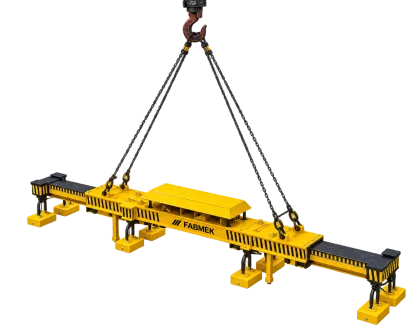
FABMEK Automation Solutions
Less manual handling. More productive manufacturing.
To improve output, we first look at how materials, machines and operators work together. We assess automatic feeding, robotic applications and integrated line options around your parts, factory and production goals.
Let's Review Your Project →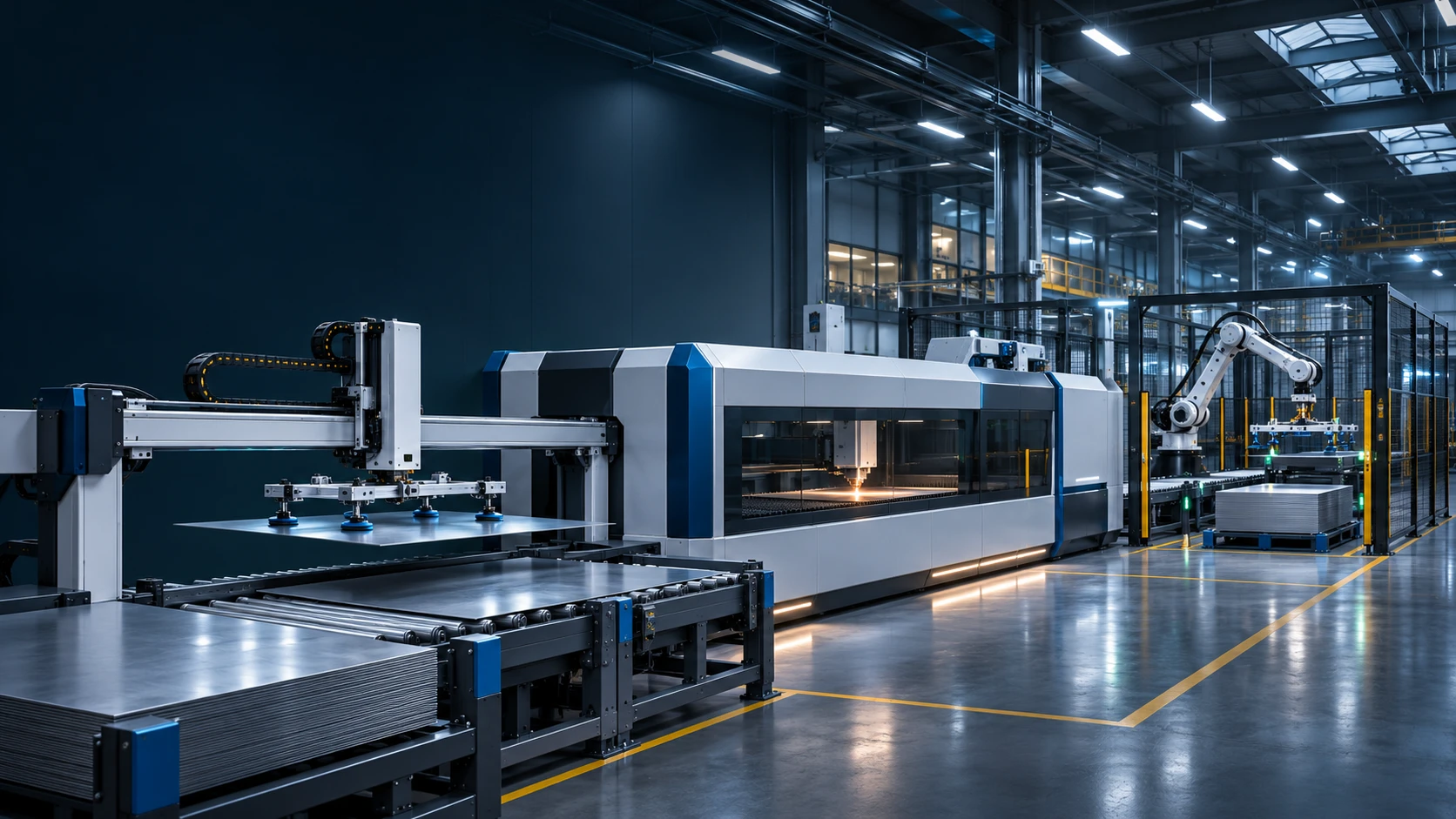
Automation Solutions for Your Production Flow
Automatic Loading & Unloading
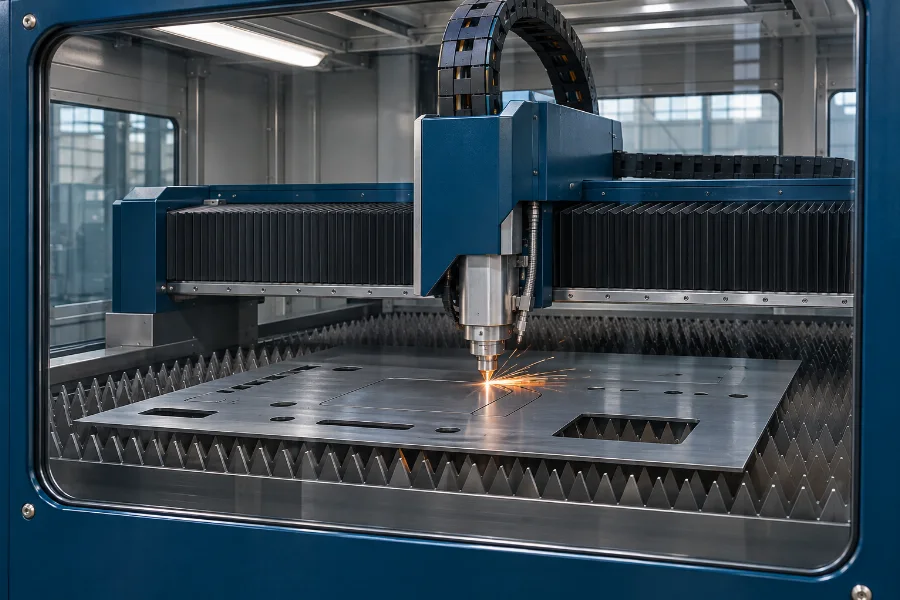
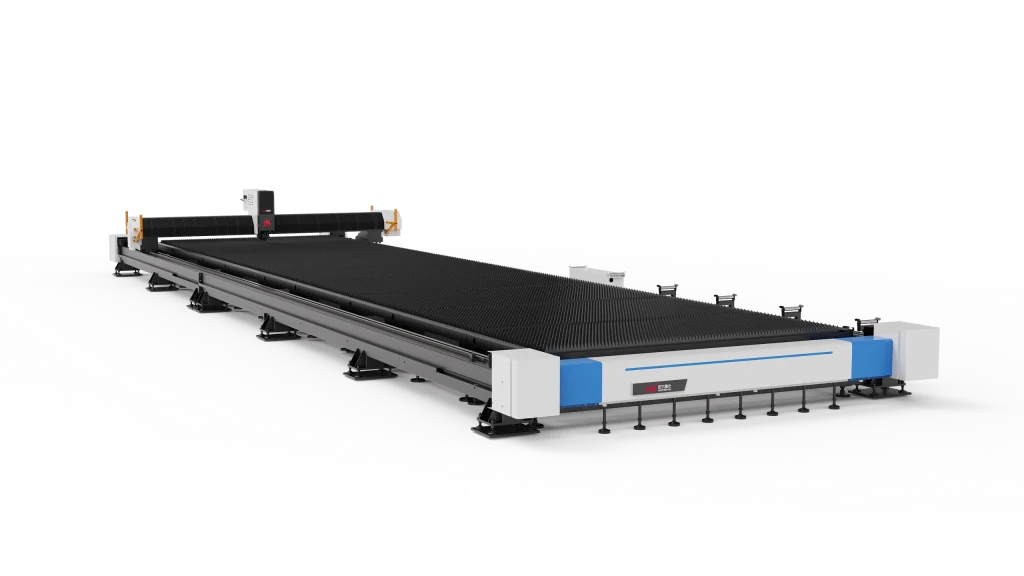
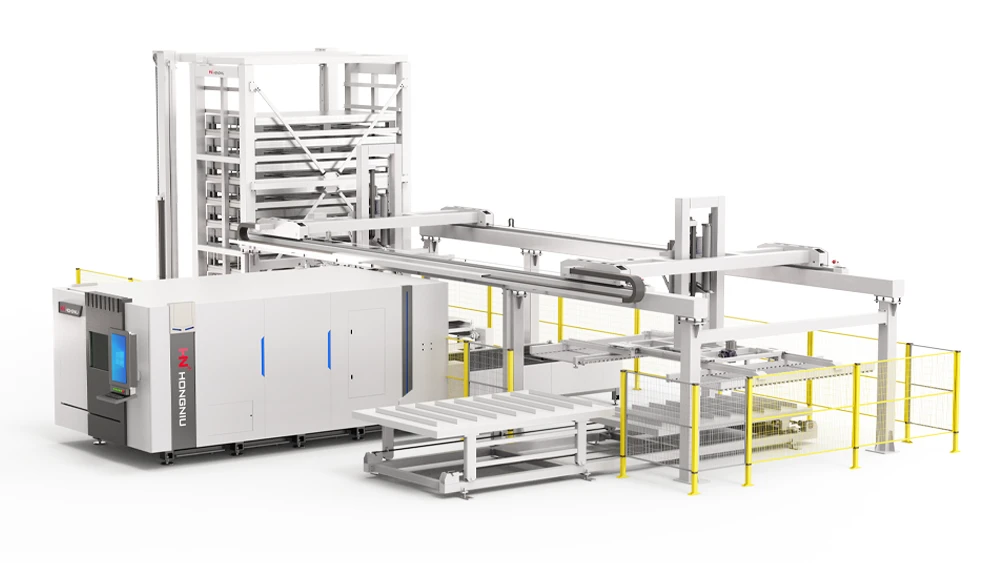
Sheet retrieval from storage, transfer to the cutting table and unloading can be planned within one cycle. Material size, weight, surface condition and stacking arrangement determine equipment selection.
Example application: coordinated storage, feeding and cutting sequences for repeat sheet work.
Explore Laser Loading Systems → Enclosed Fibre Laser with Automatic Sheet Storage →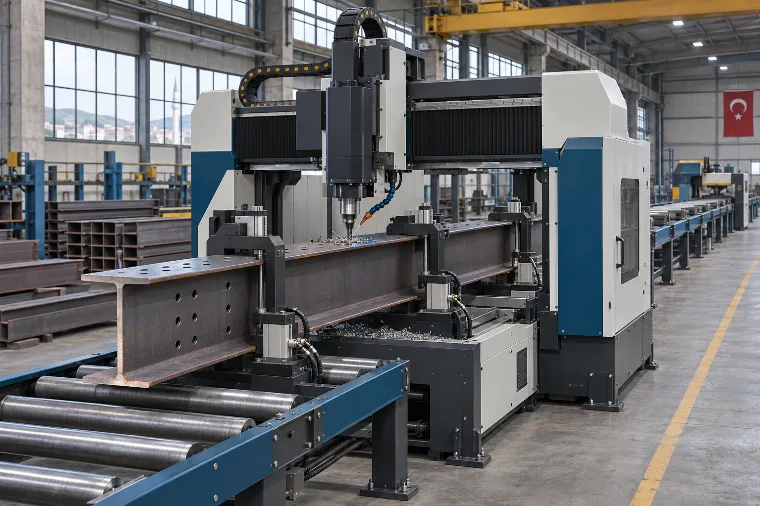
Integrated Production Lines
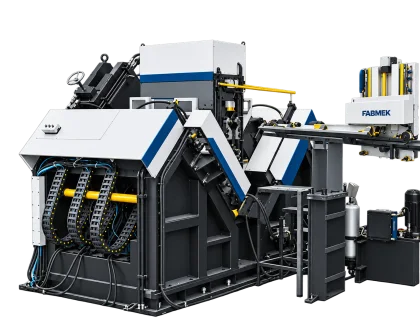
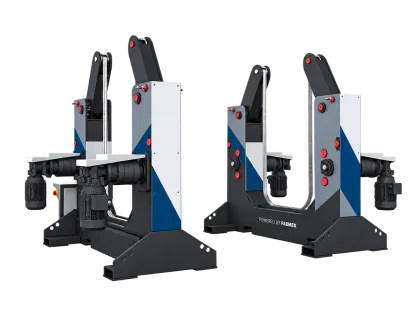
Before connecting machines, we establish each station's cycle time and how material moves to the next operation. Conveyors, transfer equipment and buffers are selected around the line's bottleneck.
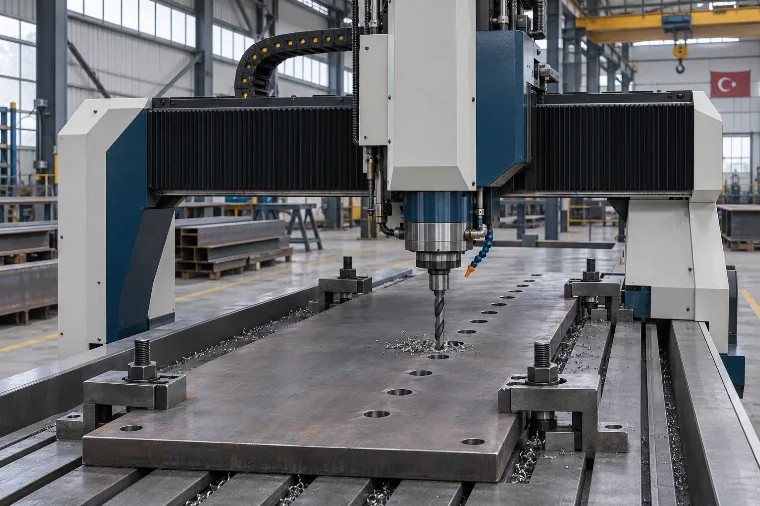
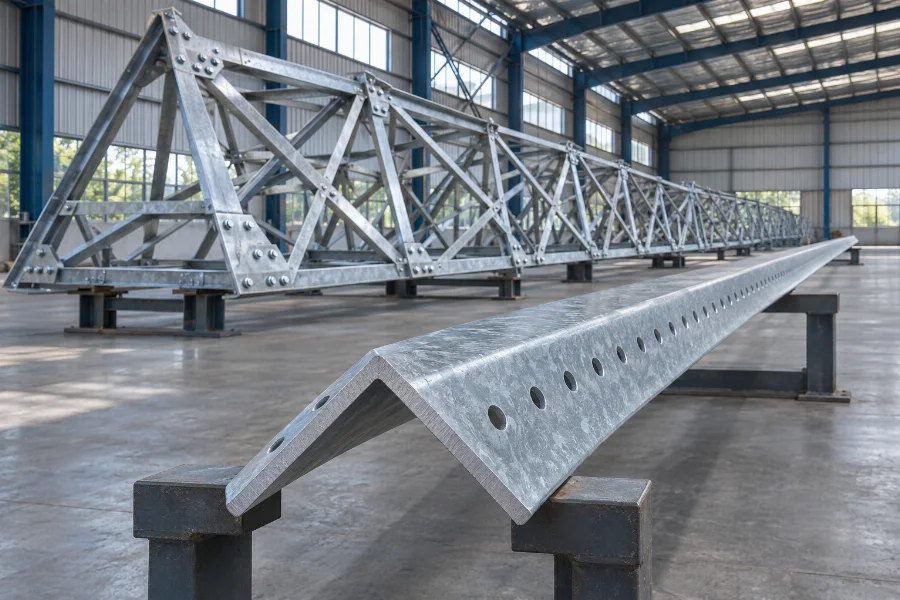
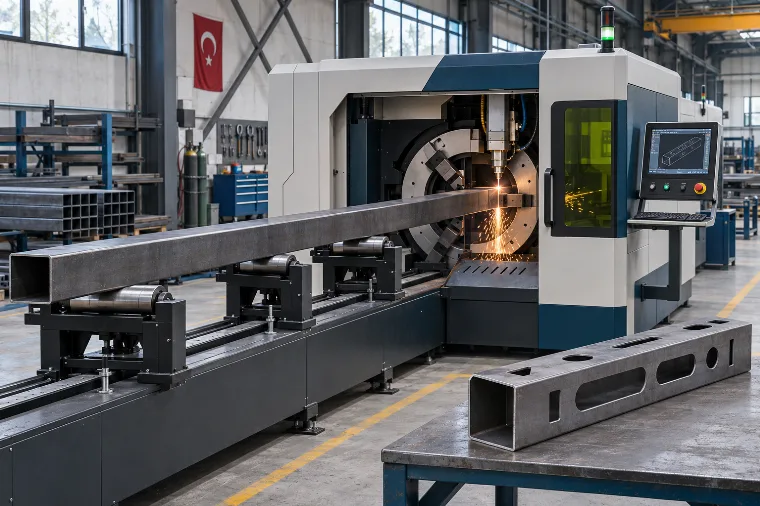
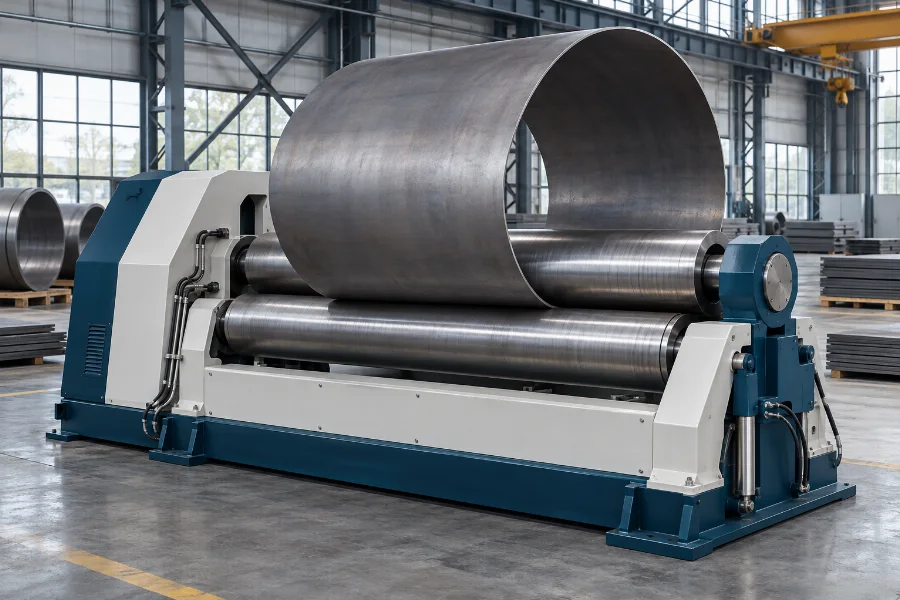
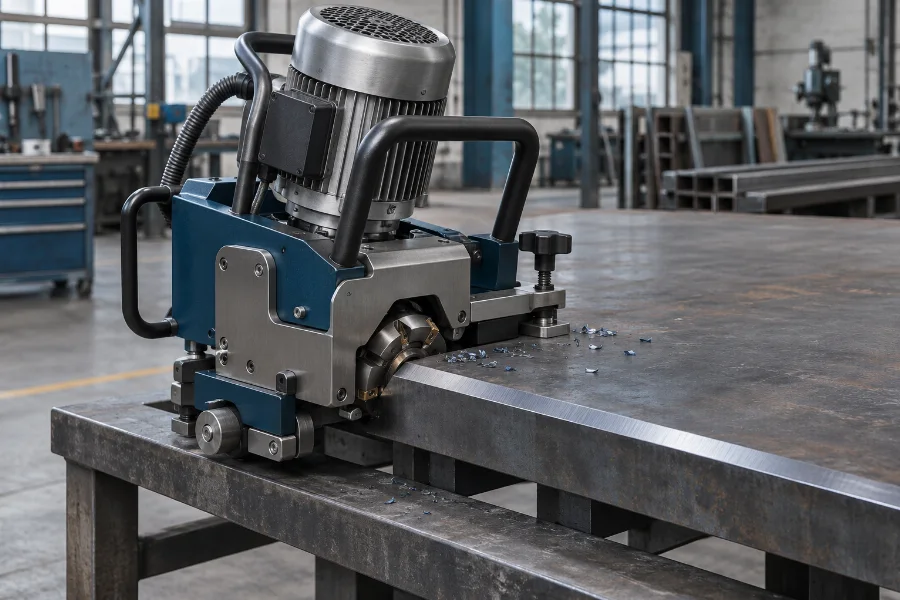
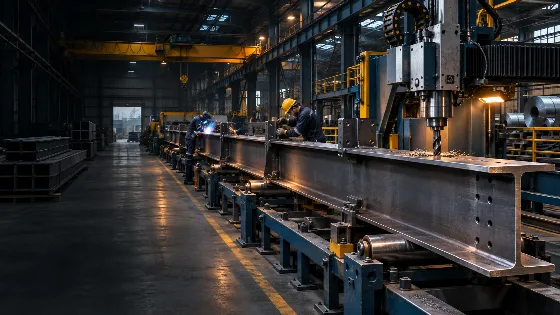
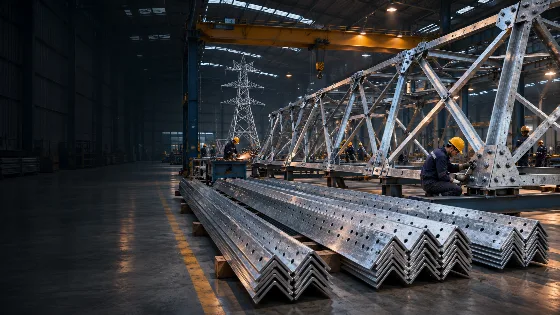
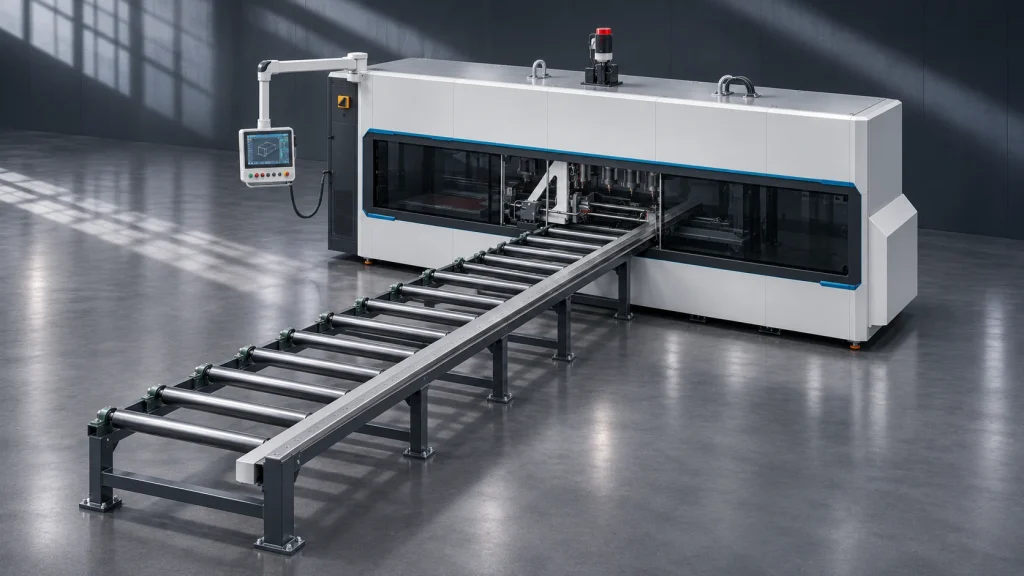
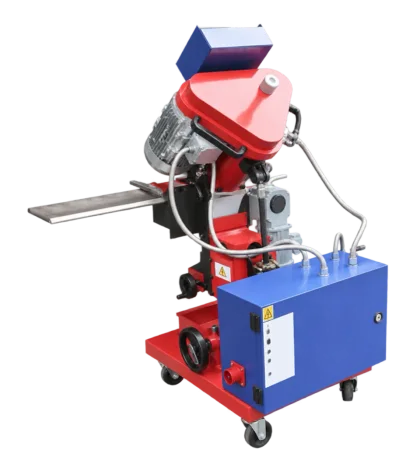
Example application: planning feeding, machining and outfeed in structural steel drilling and angle processing.
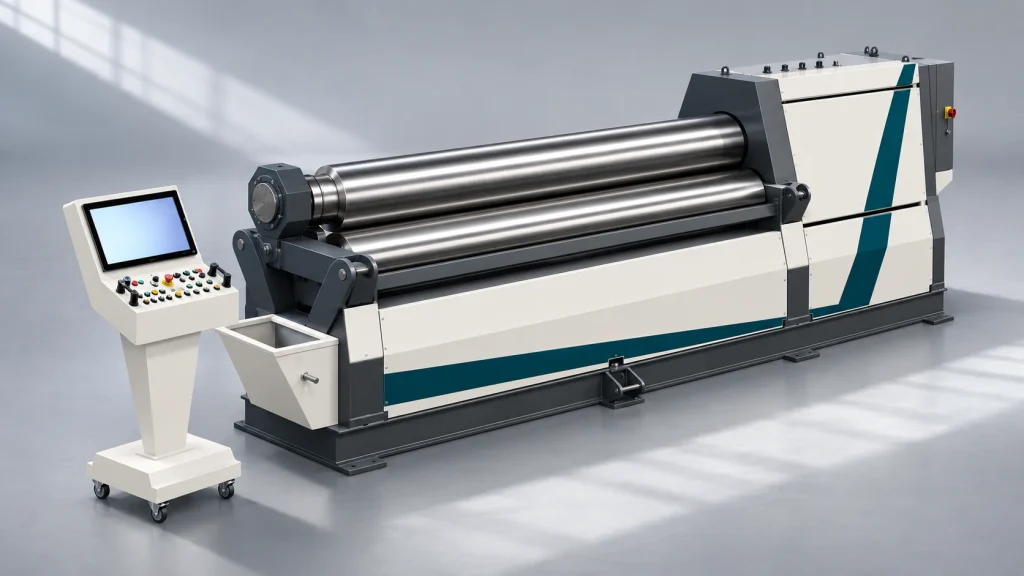
Explore Structural Steel Processing Lines → Angle Processing Machines →Plate Rolling & Profile Bending →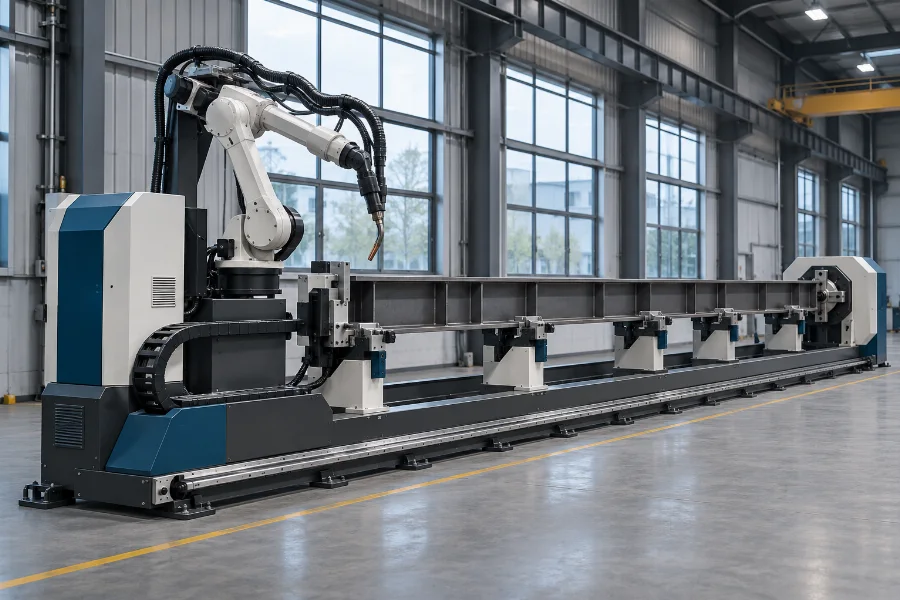
Robotic Production Cells
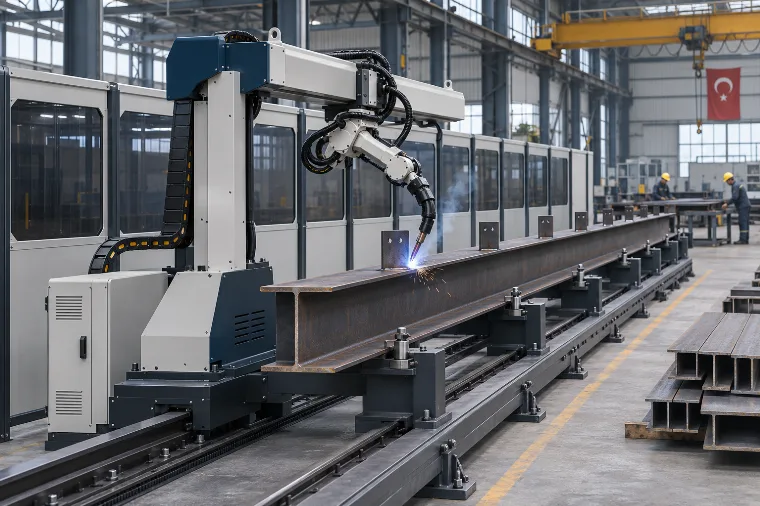
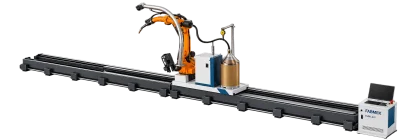
In repeat work, fixturing, part positioning and operator access matter as much as robot motion. When planning a welding cell, we assess joint positions, torch access and changeover time together.
Example application: planning the welding sequence for repeated connection plates on structural steel.
Explore Robotic Welding Stations → FABMEK FRW-A01 →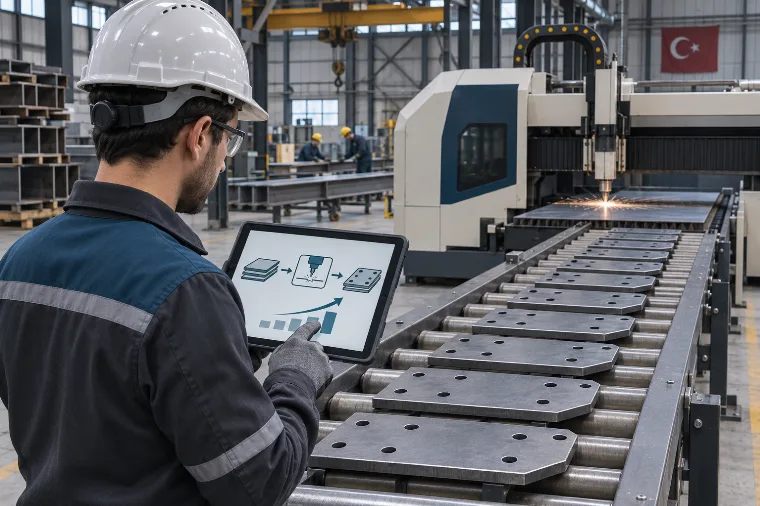
Low-Operator & Autonomous Production Systems
Where the process allows, automatic cycles, production tracking and remote monitoring can reduce manual intervention. Alarm handling, safe stops and situations requiring operator action are defined at the start of the project.
Example application: scheduling feeding and cutting around shifts and notifying the operator of exceptions.
Share Your Production Goals →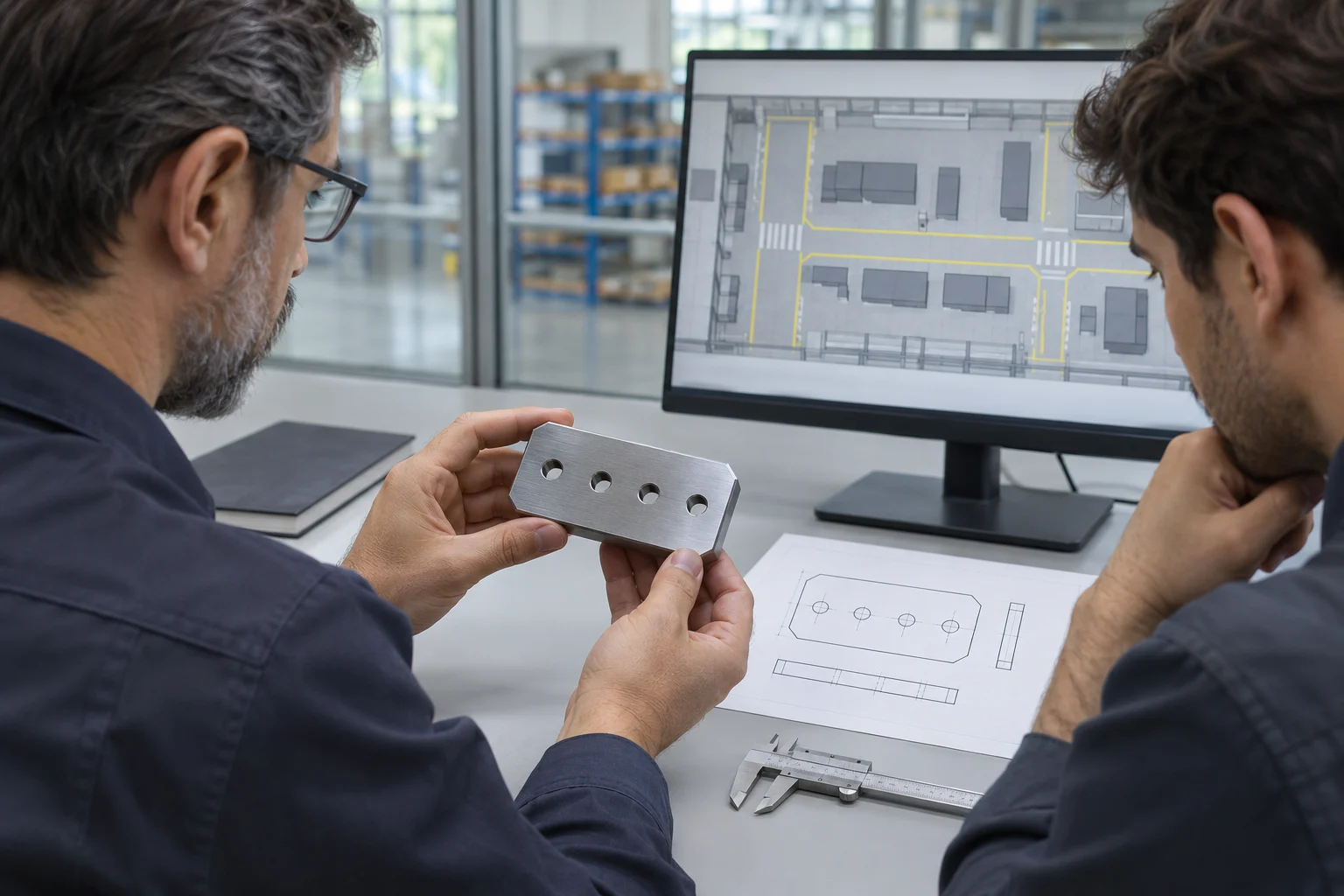
Production Line Modernisation
We begin evaluating existing equipment with its control infrastructure, safety circuits and material flow. Where suitable, feeding, transfer or monitoring can be integrated in stages.
Example application: redesigning part transfer and safe access at a station with intensive manual handling.
Explore Custom Machine Projects →How Do We Assess an Automation Project?
We start with your workpieces and current production flow. Each decision through to commissioning builds on the findings of the previous step.
-
Process Analysis
We map the current steps from material entry to finished output, identifying cycle times, waiting periods and operator intervention points together.
-
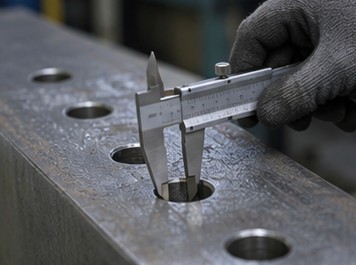
Automation Suitability
Repeat frequency, part variety and tolerances help determine which steps suit automation. We also assess safe access and the need for manual intervention.
-
System Configuration
We define how parts are held, how stations are arranged and what control equipment is needed. We compare these choices with capacity targets and factory conditions.
-
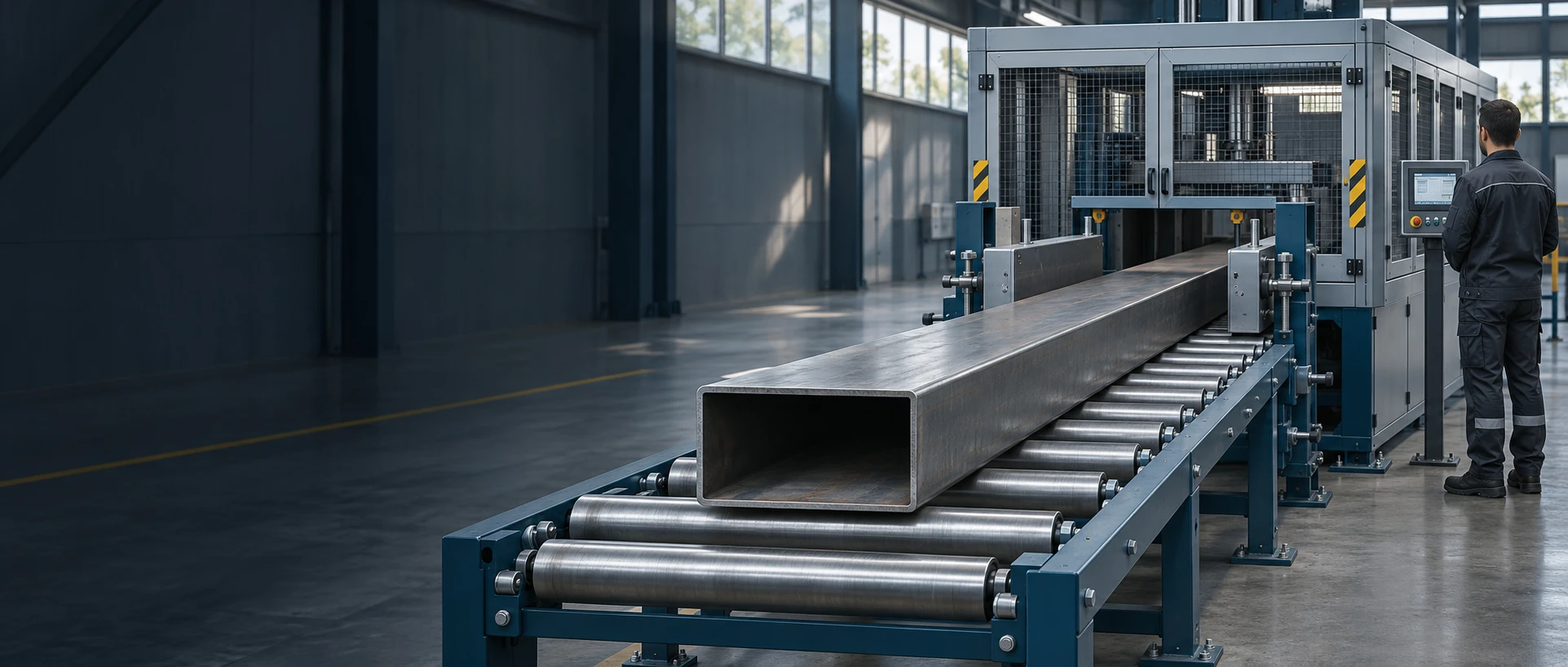
Material Flow
We plan feeding, transfer, buffers and outfeed together, considering how a delay at one station affects the rest of the line.
-
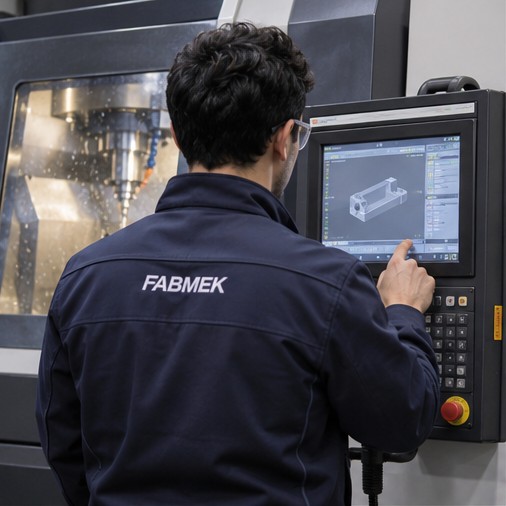
System Integration
We plan control signals between stations, safety circuits and how the line stops if a fault occurs.
-
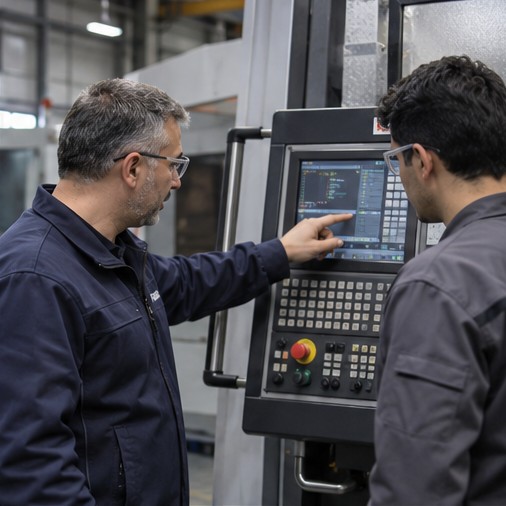
Commissioning & Support
We define test parts, acceptance criteria and operator training early in the project. Maintenance and support scope are planned around the line's operating conditions.
A Step-by-Step Route to More Controlled Production
Our aim is to improve continuity and reduce manual intervention where the process allows. Operator supervision, maintenance and exceptional situations are part of the design too.
Project Assessment
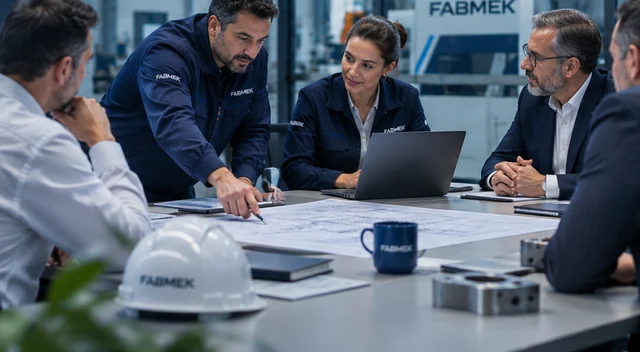
Let's Review Your Production Flow
Start by sharing your industry, the parts you make and the process you want to automate. You can also include your current line, manual steps, output targets, shifts and specific requirements.